
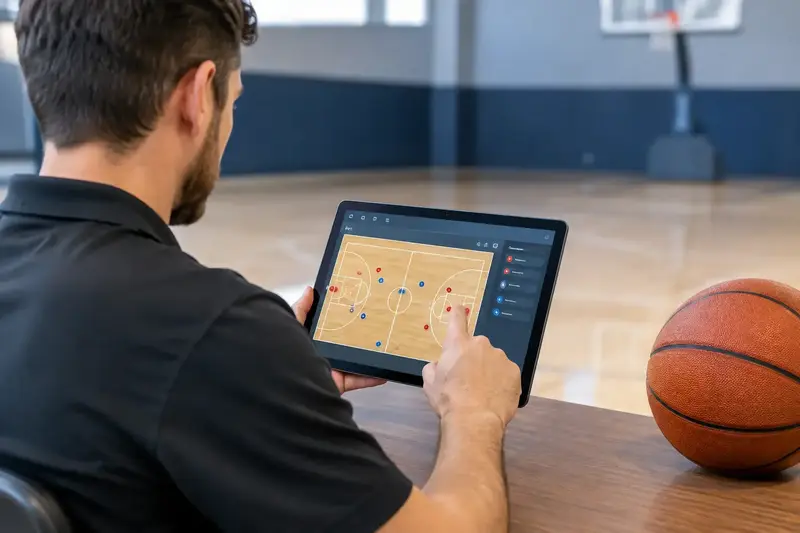
A one-point game can be decided before the final shot. A missed team foul, an incorrect player total, or a late notification that a player has fouled out changes substitutions, free-throw administration, and the credibility of the final box score. Basketball foul tracking software is built to make those decisions visible at the scorer's table when they matter, then preserve them in the official game record.
For league operators, foul tracking is not a standalone feature. It sits at the intersection of live scorekeeping, game clocks, play-by-play, statistics, standings, broadcasts, and postgame review. The right system reduces the number of corrections required after the buzzer without making the scorekeeper's job harder during live action.
What Basketball Foul Tracking Software Must Record
At minimum, the software needs to distinguish between player fouls and team fouls. When a scorekeeper assigns a personal foul to a player, the player's running total should update immediately. The team total for the current period should also advance when the rules require it. Those totals then drive the information coaches, officials, table staff, and fans need: whether a team is in the bonus, which player is in foul trouble, and whether a player has reached the league's disqualification limit.
That sounds straightforward until a real game introduces technical fouls, offensive fouls, double fouls, bench technicals, flagrant fouls, and rule variations. A recreational league may only need personal and technical foul entries. A competitive organization may need foul categories captured in the play-by-play, separate tracking for bench technicals, and reporting that matches the format used by its governing body.
The practical requirement is configurable accuracy. Software should let the operator apply the league's rules consistently rather than force a local competition into an NBA, NCAA, or FIBA assumption that does not fit. A youth league using five personal fouls and a regional adult league using a different threshold should not need separate manual workarounds.
Live totals are operational information
A running foul count is useful because it prevents avoidable interruptions. The scorekeeper can see a player's total before recording the next infraction. Coaches can make informed substitutions. The table can identify the bonus before a shooting situation is administered incorrectly. If the public game page displays live data, fans and media staff see the same current context rather than waiting for a corrected recap.
This requires more than a number beside a player's name. The game event should be tied to the correct period, team, player, and time on the clock. If an entry is corrected, dependent totals need to recalculate. Otherwise, a changed second-quarter foul can leave an inaccurate team-foul count and an unreliable box score.
The event log matters after the game
A final stat line alone cannot explain every dispute. A usable system keeps a chronological play-by-play record showing when the foul was entered and, where applicable, what followed: free throws, a timeout, a substitution, or a player disqualification. That record gives administrators a practical audit trail when a coach questions a total or a scorer needs to reconcile an event after reviewing video.
The goal is not to turn every community league into a professional replay center. It is to retain enough structure that corrections are defensible and do not require rebuilding the game from memory.
The Live Scoring Workflow Behind Accurate Foul Data
The best workflow keeps the scorer focused on the next possession. During a foul call, the scorer should select the player, record the foul type if required, and let the system update the related totals. A clear live scoring screen should make player foul counts, team fouls by period, bonus status, and disqualification warnings easy to read at a glance.
Speed matters, but so does correction. A scorekeeper may select the wrong player in a crowded transition sequence or enter a foul before an official clarifies the call. Look for an edit process that updates the event log and recalculates affected statistics without creating duplicate entries. Corrections should be available to authorized staff, while league administrators retain control over finalized records.
Clock behavior also deserves attention. Fouls happen alongside timeouts, free throws, and substitutions. A scoring environment with a purpose-built basketball clock reduces the chance that the game clock and event timeline drift apart. When the event time is captured accurately, it improves the quality of play-by-play for coaches, broadcasters, and anyone reviewing the game later.
For organizations using official postgame reports, live scoring and imported data need a clear relationship. A FIBA or GENIUS PDF box score can serve as an official source, but its player totals should be reconciled against the live record before publication. The software should support a workflow where imported results correct or complete the official record rather than leaving staff with two competing versions of the game.
Choosing Basketball Foul Tracking Software for Your League
A scoring app can count fouls. League software has to do more: connect foul events to schedules, rosters, team pages, standings, playoff brackets, statistics, and the public site. That distinction becomes more important as a league grows beyond a single gym or weekend tournament.
Start with the rules your staff actually applies. Confirm the supported personal-foul limit, team-foul reset timing, bonus rules, overtime behavior, technical foul handling, and any league-specific reporting requirement. Ask whether a player disqualification is prominently flagged during the game and whether the final box score separates relevant foul categories.
Then examine the surrounding workflow. A strong platform should support roster management before tipoff, prevent accidental selection of ineligible players where applicable, publish live play-by-play after the game begins, and make the completed box score available without copying figures into a spreadsheet. If you run playoffs, the final result should advance the correct team in a best-of-3 series or bracket based on the competition format you configured.
There are trade-offs. A stripped-down tool may be easier for a first-time volunteer scorer but leave administrators manually publishing results and rebuilding statistics later. A feature-rich system may require a short training session, especially when scorekeepers must record detailed event types. The right choice depends on game volume, staff experience, the level of public visibility, and whether your league needs official-grade records or basic recreational reporting.
Foul Tracking Should Reach Coaches, Fans, and Broadcasts
Accurate foul data has value beyond the scorer's table. Coaches need current player totals. Fans following remotely want an honest view of game flow. Media teams need a reliable source for commentary and graphics. When data is entered once and delivered in real time, every audience works from the same record.
For streaming operations, live foul totals can feed a browser-source overlay in OBS alongside the score, period, clock, and player statistics. That is a more dependable approach than asking a production volunteer to maintain a separate graphic manually. WebSocket event delivery can update connected views as the scorekeeper records events, helping the broadcast match the game without an extra layer of data entry.
Public publishing also changes the postgame workload. Instead of writing results into a website after the venue clears, league staff can publish a completed game page with the score, box score, fouls, and play-by-play already attached to the correct schedule entry. Supporters can receive real-time updates or notifications through the league's own branded digital home.
A multi-tenant platform such as bbstats.am also gives each organization its own isolated league environment, visual identity, and public site. That matters when several leagues share administrators, venues, or scoring personnel but need separate schedules, records, and fan-facing brands.
Questions to Ask Before Game One
Can scorekeepers practice without affecting the season?
They should be able to. A demo or test game lets staff rehearse foul entries, corrections, clock controls, and player disqualification scenarios before a live competition. Resettable demo data is particularly useful for training new volunteers.
What happens if the internet connection drops?
Ask specifically about the scoring device's behavior, saved events, and recovery process. A live game cannot wait for a perfect network. The provider should explain how data is protected, how a scorer resumes work, and how administrators access backups or restore records if required.
Who can edit a finalized game?
The answer should reflect your governance model. Many leagues need scorekeepers to correct obvious live mistakes, while only commissioners or designated statisticians can revise a completed official result. Clear permissions protect the record and avoid quiet, untraceable changes.
A foul call is a small event on the court, but it can affect the next free throws, a player's availability, a broadcast graphic, and the trust people place in your league's records. Set up the rules, train the table crew on realistic game situations, and make every live entry part of one authoritative game record.