
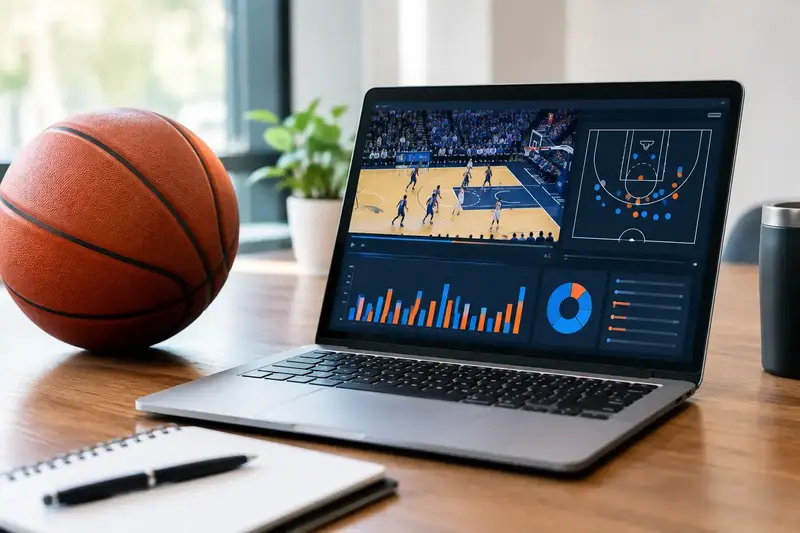
A game ends at 9:14 p.m. The scorekeeper has a paper sheet, the commissioner needs updated standings, a coach wants the box score, and parents are already asking whether the semifinal matchup changed. Basketball reporting tools determine whether those requests create an hour of manual work or produce accurate updates while the gym is still full.
For a league operator, reporting is not just a postgame recap. It is the operating record of the competition: every made shot, foul, timeout, roster decision, tiebreaker, and playoff result. The right system turns that record into live information for staff and a credible public experience for fans.
What Basketball Reporting Tools Need to Cover
Many leagues begin with a spreadsheet, a scoring app, and a basic website. That arrangement can work for a short recreational season with a few teams. It becomes fragile when results need to publish quickly, statistics influence awards or seeding, and multiple people need access to the same current information.
A practical reporting system should connect game operations to league publishing. The scorekeeper records an event once, and that event updates the box score, play-by-play, team totals, player averages, standings, and public game page. Without that connection, operators spend their time moving data between systems and checking whether each version agrees.
The distinction matters most after close games. If a late technical foul, corrected three-pointer, or overtime period changes the final record, the correction should reconcile throughout the league site. Coaches should not be looking at one score in a PDF, another in the standings table, and a third on social media.
Live scorekeeping and event capture
A useful scorekeeping interface must be fast enough for the table crew. Scorekeepers need to log field goals, free throws, rebounds, assists, steals, blocks, turnovers, fouls, substitutions, and timeouts without losing the flow of the game. NBA-style clocks and possession-aware game controls also reduce avoidable errors in competitive environments.
Play-by-play is especially valuable because it provides an audit trail. When a coach questions a player total, the operator can review the sequence of events rather than reconstruct the game from memory. It also gives fans a meaningful live experience when they cannot attend in person.
Real-time delivery matters here. When scoring events are sent to public pages as they happen, supporters see the game develop possession by possession. A delayed manual refresh may be acceptable for internal administration, but it does not meet the expectation of a live league product.
Statistics that remain credible after the buzzer
A final score is only one layer of reporting. Most leagues also need player leaders, team comparisons, cumulative totals, per-game averages, shooting percentages, and sortable stat tables. Those outputs are useful only when the underlying game data is consistent and corrections flow through automatically.
There is also a place for official-stat imports. A tournament may receive completed FIBA or GENIUS PDF box scores from a venue, federation, or data provider. Re-entering those documents creates delay and introduces transcription mistakes. Import support can bring official records into the same competition database used for standings, team pages, and fan reporting.
The trade-off is that imported games may not contain every live event needed for a detailed play-by-play. Leagues should decide whether a game requires live table scoring, an official postgame import, or both. The right workflow depends on staffing, venue connectivity, and the level of reporting expected by teams and supporters.
Reporting Must Drive Standings and Brackets
League reporting becomes operational when it controls what happens next. A score should update wins and losses immediately, apply the league's configured ranking logic, and show the next scheduled opponent. During a tournament, that same result may advance a team into the next bracket slot.
Manual bracket management is a common failure point. An organizer updates one result, then needs to revise the bracket image, notify teams, confirm court assignments, and make sure the website reflects the same pairing. With an integrated bracket, the reported final score can advance the winner automatically and populate the next game.
This is particularly useful for best-of-3 playoff series. The system should show the series score, determine whether another game is required, and prevent a team from advancing prematurely after only one win. Operators still need authority to correct an exceptional result, but the standard progression should not depend on a late-night spreadsheet edit.
Standings also need transparent rules. Some competitions use winning percentage, while others prioritize head-to-head results, point differential, division records, or forfeits. Basketball reporting tools should let operators apply the rules established by the league, then publish the outcome clearly. A standings table is more trusted when teams can see that results and tiebreakers are being handled consistently.
The Public Reporting Experience Is Part of the Product
Fans do not separate a league's operations from its public presentation. If schedules are outdated, statistics appear days later, or team pages look disconnected from the brand, the competition feels less organized than it may actually be.
A public-facing league site should present schedules, final scores, standings, player statistics, team rosters, brackets, and game details in one place. It should work on mobile devices because many supporters check results from a gym bleacher, a car, or another game across town. For leagues building a recognizable identity, white-label colors, logos, and a custom domain make the reporting environment feel like the league's own product rather than a collection of third-party tools.
Notifications extend that experience beyond the website. A schedule change, a final score, or the start of a playoff game can reach supporters through push or email updates. This is more effective than expecting every participant to remember to check a page, especially in youth, club, and regional leagues where last-minute changes are common.
The reporting layer can also support live production. Browser-source overlays for OBS can display current scores, clocks, team names, and player information during a stream. Because the overlay reads from the same live game record, the broadcast crew avoids manually maintaining a second scoreboard. That reduces mismatched scores and gives a local stream a more professional presentation.
How to Evaluate a Reporting Platform
The best choice is rarely the platform with the longest feature list. Start with the points where your current workflow breaks: delayed score entry, missing player stats, inconsistent standings, difficult playoff administration, or a fan site that requires separate updates.
Then test the game-day workflow. Can a scorekeeper enter a full game without extensive training? Can an administrator correct an event after review? Does the final game record update team and player reports without a manual export? Can a staff member preview what fans will see before publishing a season?
Data ownership and administration deserve the same scrutiny. Look for clear access controls, separate league environments, backup retention, and an export path for your records. A multi-tenant platform should keep each league's data isolated while allowing that league to manage its own teams, rosters, branding, users, and communications.
Finally, consider implementation effort. A product that requires months of custom development may be unnecessary for an independent league. A self-service platform with demo access, resettable sample data, and guided setup can help operators validate the full workflow before they commit to a live season.
One Record, Used Everywhere
bbstats.am is designed around this connected model: live scorekeeping feeds real-time play-by-play, box scores, statistics, standings, brackets, fan pages, notifications, and streaming-ready overlays from a single league record. That approach is useful because it removes the recurring handoff between the people operating games and the people publishing information.
No platform can compensate for unclear competition rules or untrained table staff. Leagues still need to define roster eligibility, stat responsibilities, correction procedures, and tiebreakers before opening night. But when those rules are supported by connected reporting, staff can spend less time reconciling records and more time running the basketball competition supporters came to follow.
A reliable report should do more than document what happened. It should make the next decision, the next game, and the next fan update easier to deliver.