
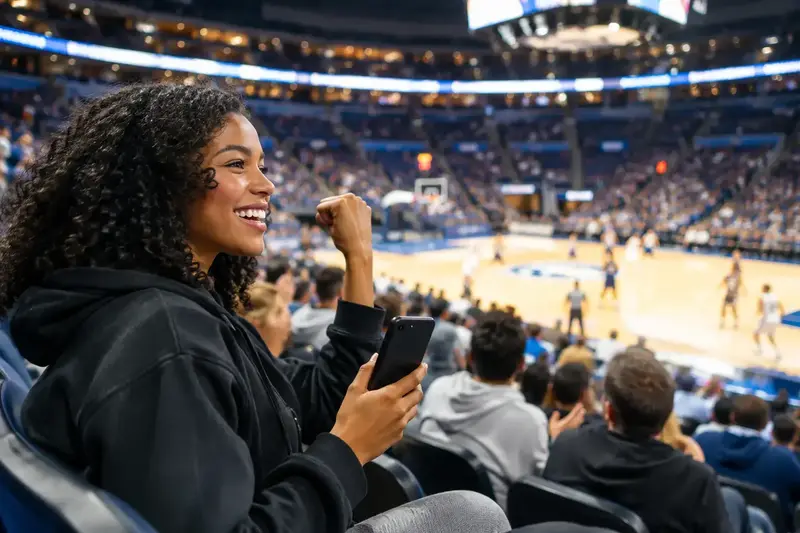
A close game should not disappear when the final horn sounds. For a basketball league, fan engagement starts when supporters can follow the action as it happens, verify what happened afterward, and know exactly when the next meaningful game is scheduled. If scores remain in a scorebook, standings are updated days later, and playoff information lives in a social-media post, fans have little reason to keep checking in.
The standard is higher now, even for local, youth, recreational, and independent leagues. Players expect their stat lines to be visible. Parents want reliable schedules and results. Coaches want current standings. Sponsors and media partners need a credible place to direct an audience. The good news is that building this experience is less about producing more content and more about publishing the right operational data quickly and consistently.
Fan Engagement Begins With Trustworthy Live Data
The strongest fan experience is built on the same information a league uses to operate: the official game clock, scoring events, team rosters, box scores, standings, and playoff results. When those records are accurate and available in real time, every audience gets a useful reason to visit the league site.
Live scorekeeping is the foundation. A supporter following a game from home does not need a polished television production to stay interested. They need to know the score, period, time remaining, fouls, and the sequence that changed the game. Real-time play-by-play turns a score into a story: a late three-pointer, a technical foul, a scoring run, or the defensive stop that decided the result.
This is where the quality of the underlying workflow matters. A live game page only builds confidence when it is fed by a scorekeeper using an NBA-style clock and structured event inputs, not by an administrator trying to reconstruct the game from memory. WebSocket event delivery can update the public view as scoring events are recorded, so supporters see changes without repeatedly refreshing a page.
Speed should not come at the cost of accuracy. Scorekeepers need a practical way to correct an entry, reconcile the final box score, and finalize the game once the officials have confirmed it. A league should treat the live page as a current game record and the finalized box score as the official record. That distinction protects credibility when a statistic or scoring event needs review.
Make Every Game Easy to Find and Follow
Fans do not organize their attention around your internal administration. They want to find their team, see its next game, check the latest result, and understand what is at stake. A public-facing league website should make that path obvious from the first screen.
A schedule page answers the immediate question: when and where is the next game? Team pages create a more durable destination by bringing together rosters, results, upcoming fixtures, and player statistics. League standings explain the wider picture, particularly when several games on the same night affect seeding. These pages are not separate marketing assets. They are connected views of the same league data.
For operators, that connection eliminates duplicate publishing work. When a schedule changes, the schedule page, team page, and supporter notification should reflect the same update. When a result is finalized, standings can advance automatically according to the league's configured rules. The league avoids the common problem of posting one result on social media while a website, spreadsheet, and bracket show different information.
Branding also has a practical role. A dedicated league subdomain or custom domain, team colors, logos, and a consistent visual identity make the competition feel established. Automatic HTTPS matters here as well. Supporters should arrive at a secure, professional-looking destination rather than an assortment of shared documents and temporary pages.
Use Statistics to Extend the Life of the Game
Final scores draw attention, but statistics give fans something to discuss between games. A player who scored 28 points, a center leading the league in rebounds, or a team climbing the defensive rankings can create interest long after the gym is empty.
The useful version of this is not a spreadsheet dump. Publish player and team statistics that can be understood in context: leaders, game logs, season totals, and team records alongside the standings. A parent can check a player's development. A coach can prepare for an opponent. A local writer can identify a matchup worth covering. Players can share a credible public record rather than manually typing their numbers into a post.
Not every league needs every advanced metric. For a youth or recreational competition, accurate points, rebounds, assists, fouls, and team records may be the right level of detail. A semi-professional league may benefit from deeper splits, game logs, and more detailed play-by-play. The right approach depends on the competition, but official and timely data is more valuable than a complicated stats page that is rarely updated.
Imported records deserve the same discipline. If a league receives official FIBA or GENIUS PDF box scores, importing them into the central system can preserve continuity without forcing staff to re-enter completed games. Once imported and reviewed, those box scores should feed the same player pages, standings, results, and historical record as live-scored games.
Playoffs Create the Best Reason to Return
Regular-season schedules create routine. Playoffs create urgency. Fans return when they can see who has qualified, which result changes the bracket, and when the next elimination game will be played.
A published playoff bracket should be more than a static image. It should reflect actual series status and advance teams automatically when a result is finalized. In a best-of-3 series, supporters should immediately see whether a team leads 1-0, whether Game 2 is an elimination game, and which opponent awaits in the next round. That is the information people otherwise chase through comments, group chats, and unofficial posts.
Automatic bracket updates also reduce operational risk. Manual updates are easy to miss during a busy tournament weekend, especially when multiple divisions are playing. When the scoring workflow and bracket logic share the same league data, the public view moves forward with the competition.
Turn Notifications Into Useful Service
Push and email notifications can bring supporters back, but only when they are specific and timely. A generic blast every few days becomes noise. A game reminder, final score, schedule change, or playoff advancement provides immediate value.
Think in terms of moments that matter. Notify followers before a scheduled game, when a game reaches a final result, and when a change affects a future fixture. For a league with several divisions, segmentation is essential. A supporter of the girls varsity division should not receive every update from adult recreation or youth development games.
The trade-off is frequency. High-volume live alerts may work for a championship game with a committed audience, while final-score notifications are more appropriate for a broad community league. Give administrators control over the type and timing of messages, then use that control with restraint.
Give Broadcast and Media Staff a Reliable Source
Streaming can make a local competition feel substantially more accessible, but it often creates a separate production workflow. A broadcaster tracks the clock in one tool, pulls graphics from another, and waits for someone to send corrected stats. That separation introduces delays and visible errors.
A better setup uses the live scoring system as the source for streaming-ready graphics. OBS browser-source overlays can display a live scorebug, game clock, team names, logos, and relevant game details directly from the same data being recorded by the scorekeeper. When the score changes in the official workflow, the overlay updates with it.
This does not replace good production. Cameras, commentary, internet reliability, and staffing still determine the quality of a stream. It does remove one major failure point: manually keeping broadcast graphics aligned with the official game record.
Measure What Supporters Actually Use
Engagement is not just page views. A high number of visits may be useful, but it does not explain whether fans found current schedules, followed live games, or returned for playoff updates. League operators should look for patterns around the competition calendar.
Useful signals include live-game traffic, repeat visits to team pages, notification opens, schedule-page visits after an update, and the attention generated by standings or bracket changes. These measures help a league decide whether to invest in more live coverage, improve its team pages, or adjust notification timing.
The clearest test is operational: can a supporter find the correct game, follow it live, understand the final result, and see what happens next without asking an administrator? If the answer is yes, the league has built a digital home that supports the competition instead of adding another task to manage.
Platforms such as bbstats.am are designed around that connected workflow: scorekeeping, official records, public publishing, notifications, brackets, and broadcast overlays operating from one branded league system. The goal is not to make a local league imitate the NBA. It is to give every game the clear, reliable presentation its players and supporters deserve.
The next time a close game ends, check what a fan can do in the first two minutes afterward. If they can see the verified result, review the box score, understand the standings, and find the next game, the league has already earned the next visit.