
A scorekeeper corrects a fourth-quarter turnover, and the league website, standings, player totals, and broadcast overlay all need to reflect the official change. That moment exposes the practical difference in multi tenant versus shared leagues. The question is not only where software is hosted. It is whether each basketball organization controls its own data, workflow, identity, and public experience without affecting another organization.
For league operators, the distinction shapes far more than an admin login. It affects who can edit rosters, how a disputed box score is reconciled, whether a sponsor appears on the right site, and whether a local league can present itself as a credible competition rather than a page inside someone else’s platform.
What multi-tenant means for a basketball league
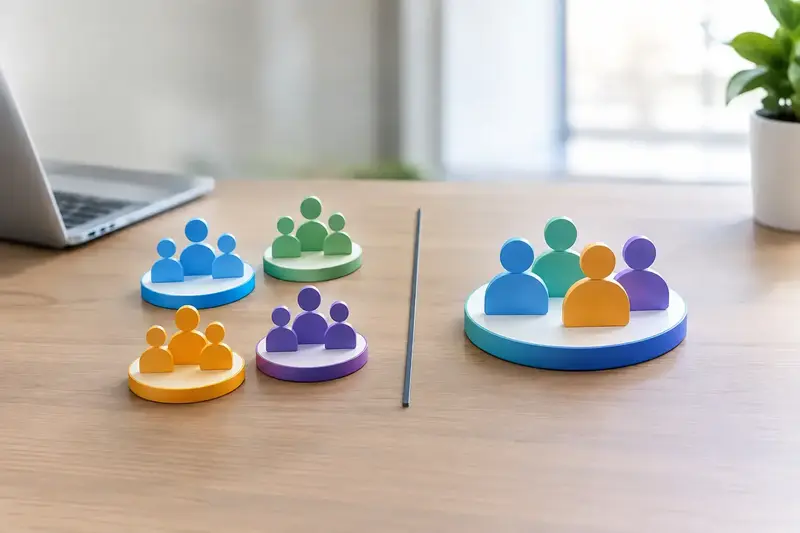
A multi-tenant platform serves many organizations from a common software foundation while giving each organization its own isolated tenant. A tenant is the league’s dedicated operating space: its teams, athletes, seasons, schedules, game records, standings, branding, administrators, and public website belong to that league.
The infrastructure can be shared efficiently behind the scenes, but the league experience should not be shared. One tenant should not expose another league’s player directory, unpublished schedule, internal staff notes, or notification audience. An administrator for a youth league should not be able to alter a regional semi-professional league’s playoff bracket simply because both use the same platform.
This model is especially useful when an operator runs recurring seasons. The league can retain its historical records while creating a new season with new divisions, rosters, rules, and schedules. Fans can still find last year’s results, while the current season remains the active public destination.
Isolation is operational, not just technical
Data isolation sounds like a backend concern until game night. Consider a scorekeeper entering live actions through an NBA-style clock and play-by-play interface. Every made basket, foul, timeout, and substitution must be attached to the correct game within the correct league tenant. The resulting team and player statistics need to update only for that competition.
The same is true when importing an official FIBA or GENIUS PDF box score. The imported game must reconcile against the intended teams, roster identities, and season totals. Good tenant boundaries prevent an imported result from creating duplicate players or contaminating statistics in another organization with similarly named teams.
A mature multi-tenant system also separates administrative permissions. Commissioners may manage schedules and brackets. Scorekeepers may record games. Media staff may publish stories or operate a streaming overlay. Coaches may view their own roster information without receiving league-wide configuration access. These permissions are more useful when they are applied inside a defined league environment.
What shared leagues usually mean
The phrase “shared league” can describe two different arrangements, and operators should ask which one a provider means.
In the first arrangement, multiple people share access to one actual competition. This can be appropriate. A league commissioner, head scorekeeper, and media producer may all work in the same league tenant because they are operating the same teams, schedule, standings, and fan site. Their access is shared, but the league itself remains distinct from every other customer.
In the second arrangement, different organizations are placed into one common league environment or public directory with limited separation. They may use the same templates, navigation, domain identity, player pool, or admin structure. This approach can work for a governing body operating several tightly connected divisions, but it creates friction when independent leagues need their own identity and operating rules.
A shared setup often looks simple at the start. An organizer creates a division, enters a few teams, and publishes a schedule. Problems emerge when the organization grows. One league wants a best-of-3 playoff series, another uses a single-elimination tournament. One requires roster approvals before tipoff, another allows same-day player additions. One needs English and Spanish fan communications, while another needs sponsor-specific branding and a custom domain.
Those needs are normal, not edge cases. Independent basketball organizations rarely operate as interchangeable divisions forever.
Multi tenant versus shared leagues: the real trade-offs
Multi-tenant architecture does not mean every league gets a completely separate software codebase or server. That would make improvements slower and more expensive. The advantage is a shared, maintained platform combined with tenant-level separation and configuration.
The trade-off is that a strong multi-tenant product requires disciplined design. The provider must consistently scope database access, file storage, permissions, notifications, and public pages to the correct tenant. It must also support reliable backups, monitored infrastructure, and secure account controls. Operators should expect clarity on how data is separated and retained.
A shared league model can be a reasonable choice when a single association truly owns all divisions and wants a unified public competition. For example, a city recreation department may want every age group under one umbrella, one branding system, and one central staff team. In that case, shared administration can reduce duplication.
But independent leagues usually need boundaries. A Sunday recreational league may share a facility with a high-level summer showcase, yet they do not share sponsors, policies, player eligibility, or audience expectations. Giving each organization its own tenant lets both leagues use proven technology without blending their operations.
Branding is more than a logo setting
A shared league page often gives every competition the same visual hierarchy. The league name may appear as a subpage, while the platform or parent organization remains the main identity. That can undermine sponsor value and make fans question which organization they are following.
In a multi-tenant environment, branding can be applied at the league level: colors, logos, navigation, landing pages, and public presentation. Each league can launch with a dedicated subdomain and, when needed, connect a custom domain with automatic HTTPS. The goal is not cosmetic customization for its own sake. It is a clear, trustworthy place for players, families, coaches, and local media to find official information.
That distinction matters during playoffs. Fans should land on the correct bracket, see live advancement after a final score is confirmed, and recognize the league immediately. They should not have to search through a directory of unrelated organizations to determine whether a semifinal result is official.
Live operations require clear ownership
Live scoring is where shared workflows can become risky. If several organizations depend on the same generic scorekeeping queue, staff can select the wrong game, see irrelevant events, or publish to the wrong audience. A tenant-based workflow narrows the operating context to the league and season being run.
It also supports more reliable fan updates. A WebSocket event can deliver a scoring play to the relevant game page in real time. A push or email notification can reach supporters who opted in to that league’s updates, rather than a broad list spanning unrelated competitions. For a streaming crew, an OBS browser-source overlay can pull the current score, clock, fouls, and player statistics from the correct game without manual re-entry.
The operator still needs good procedures. Scorekeepers should verify rosters before the opening tip, commissioners should review final box scores, and access should be removed when staff roles change. Technology reduces avoidable errors, but it does not replace official game administration.
How to choose the right model
Start with the question of ownership. If your organization owns one connected competition with centralized branding, shared policy, and a common operations team, a shared league structure may be sufficient. Confirm that divisions can still have their own schedules, standings rules, and access controls.
If you operate an independent league, manage multiple unrelated clients, or expect each competition to build its own public identity, use a multi-tenant platform. Look for tenant-level separation of teams, game data, users, notifications, and branding. Ask how new seasons are created, how historical statistics remain available, and how playoff formats handle series-based advancement.
Also evaluate the fan-facing result. A platform should make it practical to publish schedules, standings, box scores, leaders, and brackets without exporting spreadsheets after every game. It should support official-stat imports when a venue or governing body supplies PDFs. And it should give production staff a clean path from live data to broadcast graphics.
bbstats.am is built around that tenant-level model: each league can operate its own branded digital home while using the same scoring, statistics, scheduling, playoff, notification, and publishing foundation.
The best choice is the one that preserves the way your league actually works. If your competition needs its own records, staff controls, visual identity, and real-time fan experience, treat those as operating requirements from the first game, not upgrades to revisit after the season is already underway.