
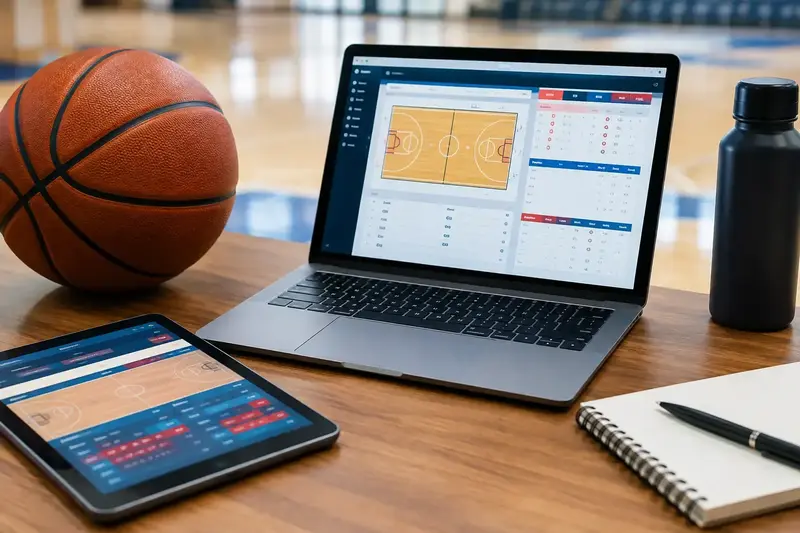
A game ends at 9:18 p.m. The scorekeeper has a paper book, a coach wants the final box score, parents are refreshing social media, and the commissioner still needs to confirm whether the result changes a playoff seed. That is the operational moment a scorebook software comparison must address. The right system is not simply the one that records points. It is the one that turns a completed possession into trusted league data, a public result, and the next correct action for your staff.
For basketball organizations, scorekeeping is the source of record for standings, player leaders, discipline reviews, playoff qualification, and fan communication. A comparison should therefore look beyond the scoring screen. Evaluate what happens before tipoff, during live play, after a correction, and when the final horn sounds.
What a Scorebook Software Comparison Should Measure
Many products can produce a final score. Fewer can support the full workflow of a season. Start by separating a basic digital scorebook from a league operations platform.
A basic scorebook application is often a good fit for a single game, a school team keeping internal records, or a scorekeeper who only needs a box score. It may track field goals, fouls, timeouts, substitutions, and individual statistics well. Its limitation appears after the game: an administrator may still need to re-enter results into standings, update a website, calculate leaders, build playoff matchups, and notify supporters.
A league platform treats the game record as connected data. Teams, rosters, schedules, competitions, standings rules, and brackets are already in the system before the game begins. When a scorekeeper records an event, the system can update the live game, play-by-play feed, player totals, team totals, standings, and public league site from the same authoritative record.
That distinction matters most when your operation has multiple divisions, recurring seasons, best-of-3 playoff series, or more than one person responsible for communications and scoring.
Live game entry and correction controls
The scorekeeping interface has to work under pressure. Look for a clear NBA-style game clock, period management, team fouls, possession-related events where applicable, timeouts, substitutions, and full play-by-play entry. The goal is not to add unnecessary taps. It is to give scorekeepers enough structure that the final box score reconciles cleanly.
Ask how the system handles corrections. Can an operator fix a missed rebound or an incorrectly assigned foul without rebuilding downstream totals by hand? Does the play-by-play remain intelligible after a correction? Can an authorized administrator review or finalize the game before statistics become official?
A fast interface with weak correction controls creates a familiar problem: a polished live feed followed by disputed statistics the next morning. For competitive leagues, auditability and accurate reconciliation are more valuable than a scoring screen that looks impressive in a demo.
Statistics that match your competition rules
Not every league needs the same statistical depth. A youth recreation program may prioritize score, attendance, and basic player totals. A semi-professional league may need shooting splits, advanced team reports, complete game logs, and searchable historical records. Choose a system that fits your reporting expectations without forcing volunteer scorekeepers through an overly complex workflow.
Also confirm how statistics are calculated and published. Individual totals should connect to the player roster, team totals should reconcile with the game score, and leaderboards should use clear qualification rules. If your league receives official FIBA or GENIUS PDF box scores from a venue or governing body, import support can prevent duplicate data entry and protect the official record.
The practical test is simple: after a game is finalized, can a coach, media contact, and commissioner all retrieve the same answer to a statistical question?
Compare the Full League Workflow, Not Just the Scorebook
A scorebook sits at the center of game night, but the season is managed around it. Compare what the software does with a finished result.
Standings, schedules, and playoff advancement
Manual standings are one of the most common sources of preventable league errors. A single corrected game can affect win-loss records, point differential, tiebreakers, and playoff eligibility. Software should calculate standings from finalized games according to the rules you define and make the current table visible to the right audience.
For postseason play, examine bracket behavior closely. A static bracket graphic is not a bracket system. The useful version understands the relationship between games and series. When a team wins the second game of a best-of-3 series, the platform should advance that team automatically, create or activate the correct next matchup, and update the public bracket without staff rebuilding it in a separate document.
Schedules deserve the same attention. Operators should be able to assign venues, game times, divisions, and teams from a central schedule, then make controlled changes when weather, facility conflicts, or rescheduled games occur. The scoring workflow should open the correct scheduled game with the correct rosters already available.
Fan publishing and real-time delivery
Live scoring has limited value if fans cannot find it. In a useful comparison, evaluate the public experience alongside the operator experience. Does the product provide a branded league website or only a shareable game link? Can supporters view schedules, results, standings, team pages, player statistics, playoff brackets, and live play-by-play in one location?
Real-time delivery matters here. WebSocket event delivery, for example, can push a made basket or timeout to connected viewers without requiring them to refresh the page. That is a meaningful difference for parents following an away game, media staff publishing recaps, and supporters checking a tight playoff finish.
Notifications should also be connected to the schedule and game state. Push or email messages about a postponement, a final result, or an upcoming game are more reliable when they come from the same operational system that holds the official event data. Separate tools can work, but they introduce more handoffs and more opportunities for an outdated message.
Broadcast and production readiness
A league that streams games should not have to choose between accurate statistics and a professional broadcast presentation. Ask whether the platform supports browser-source overlays for OBS or comparable production tools. A production team should be able to display live score, clock, team identity, and relevant game information from the same source used by the scorekeeper.
The trade-off is worth considering. A simple scoreboard overlay may be enough for occasional streams. Organizations producing regular broadcasts benefit from a connected overlay because it reduces the need for someone to manually mirror changes across a scoring app and graphics system. The closer the overlay is to the official scorebook data, the lower the risk of showing the wrong score on air.
Evaluate Administration, Branding, and Data Control
A product can score games accurately and still create administrative friction. League operators should inspect how teams, rosters, seasons, staff permissions, and brand settings are managed.
Role-based access is a practical requirement. Scorekeepers need access to assigned games. Coaches may need roster visibility without the ability to alter finalized records. Commissioners need authority to correct, approve, and publish. Media staff may need a public-facing workflow without access to private administration. A comparison should clarify whether permissions support those real responsibilities.
Branding is not just a design preference. A dedicated league site, custom colors, logos, and an optional custom domain make results easier for fans and sponsors to trust. Automatic HTTPS removes a common technical task from volunteer administrators. For organizations operating multiple competitions, tenant isolation also matters: each league should have its own data, branding, and administrative boundary rather than sharing a confusing workspace with unrelated organizations.
Finally, ask direct questions about data handling. Where do backups fit into the service? How long are they retained? Can league staff export data when needed? A season of box scores is not disposable content. It is your historical record.
A Practical Way to Choose
Before booking demos, map one actual game-night workflow. Include the person who creates the schedule, the scorekeeper at the table, the commissioner reviewing a protest, the person managing social updates, and the producer running a stream. Then ask each vendor to show those steps using a realistic roster and playoff scenario rather than a generic sample game.
Use these questions to keep the comparison grounded:
- Can the scorekeeper correct an event and keep the box score reconciled?
- Does finalizing a game update standings, leaders, and a playoff bracket automatically?
- Can fans follow live play-by-play, schedules, and statistics from a branded public destination?
- Does the system support official PDF imports when your venue supplies them?
- Can a broadcast overlay receive the same live data without duplicate entry?
- Are permissions, backups, domains, and notifications suitable for the way your league operates?
The best answer will depend on your league's scale. A one-weekend tournament may value rapid setup and reliable final results. A year-round organization with several divisions needs stronger roster administration, historical statistics, automated advancement, and a repeatable fan publishing workflow.
For leagues that want those pieces connected, bbstats.am combines live scorekeeping, league administration, public publishing, notifications, and streaming-ready overlays in one branded system. The key evaluation point is not whether a platform has the longest feature list. It is whether the result of one correctly recorded game moves every dependent part of your league forward without a spreadsheet cleanup session.